Custom Software vs Off-the-Shelf Software: How to Choose
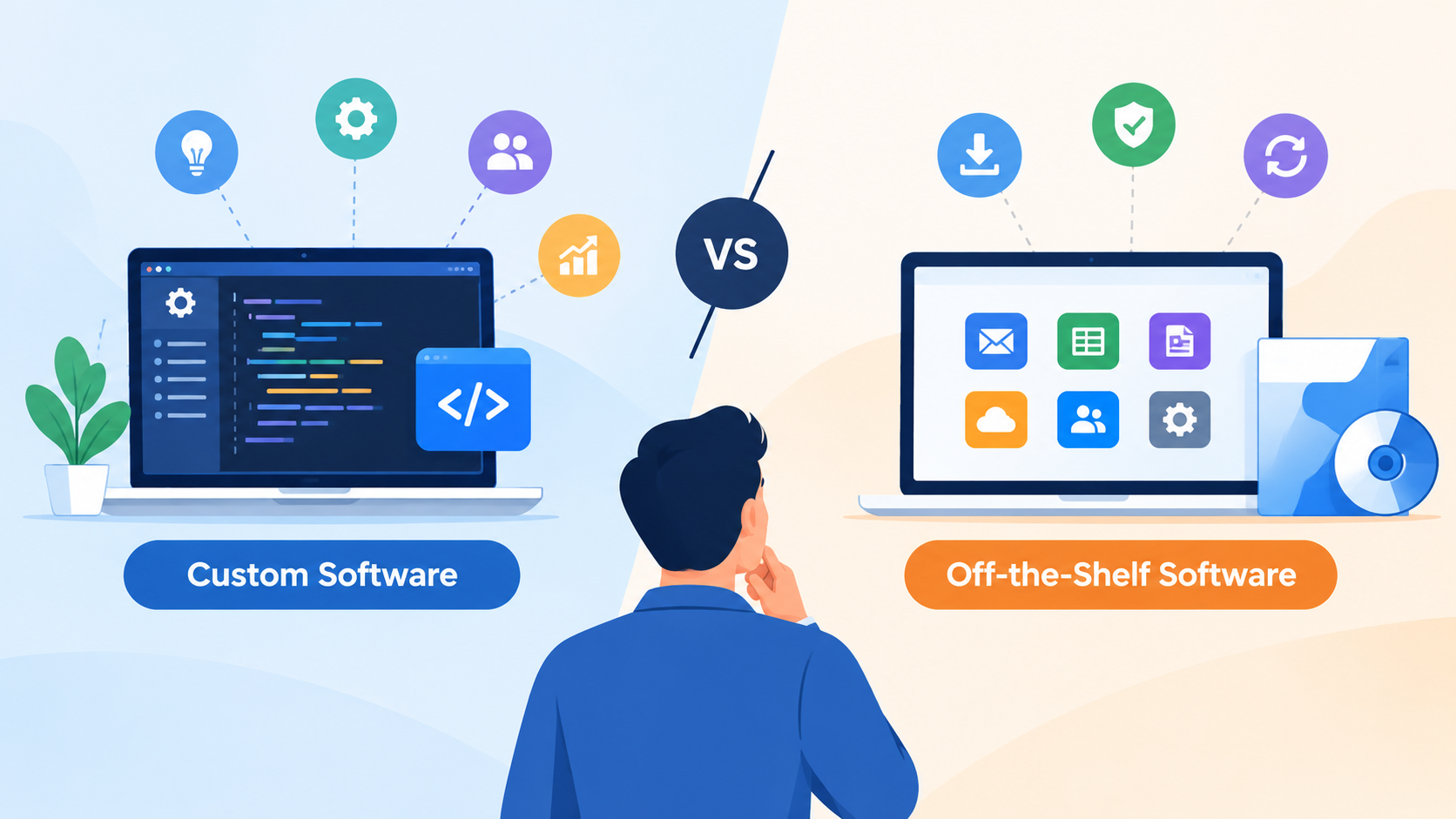
Custom software is built for the specific needs of an organization. Off-the-shelf software is a finished product for a wider audience. According to NIST, commercial-off-the-shelf products are commercially produced software that is available for sale, lease, or license.
The choice between custom software and off-the-shelf software depends on operational fit, implementation requirements and long-term responsibility. Instead, the comparison is based on what the system has to support, not on the number of features available.
Key Takeaways
Established business processes are a good fit where the features available in off-the-shelf software match the operational requirements.
Custom development can provide requirements that can not be met by configuration of packaged products.
Evaluation should include implementation, integration, maintenance, licensing and internal support.
Security for either model depends on development practices, control of access, and operational management.
Ownership, responsibilities, data access and exit arrangements should be specified in contracts before they are implemented.
https://www.youtube.com/watch?v=tO5vNbBQVKc
How Custom and Off-the-Shelf Software Differ
Established packaged platforms like Microsoft 365 and Salesforce include options for configuration and extension. You can influence their use but not control the underlying product roadmap.
Custom software allows an organization to have more control over an application’s behavior, interfaces and development priorities. That control requires well-defined ownership of the architecture, testing, deployment and maintenance.
The differences impact both procurement and day-to-day operations.
Both models cannot exclude the necessity of internal accountability. The business process owner should still approve requirements, handle any exceptions, and evaluate the system's ability to perform its intended functions.

Evaluate Business Fit and Operating Costs
One effective form of assessment distinguishes between necessities and preferences. Without this distinction, demonstrations may overshadow necessities which need to be met on a day-to-day basis.
Define the workflows that matter
Requirements should reflect real activities, approval policies, exceptions, and data dependencies. In a purchasing system, for instance, one would have to establish approval authority and transactions, rather than just an approval activity.
Out-of-the-box software should be considered if its built-in processes satisfy the requirements. The need to develop custom code emerges when the required functionality cannot be attained through proper configuration and extension.
The analysis must also differentiate between mandatory processes and routine practices. Custom software implementation of an inefficient process solves nothing.
Compare complete operating budgets
The purchase decision should consider licensing or development, deployment, migration, integration, training, maintenance, and support. The cost of internal labor should also be taken into account along with that of the supplier.
The budget for packaged software has to include subscription details, user segments, modules being paid for, and integration service. The budget for custom software needs provision for testing, dependencies, infrastructure, and change.
Total cost of ownership becomes more important than the actual purchase cost. Neither approach has a definite cost advantage over the other for all organizations.
Assess Integration and Security Responsibilities
When it comes to transferring business information or sensitive information, merely functional fitness is not enough.
Establish integration boundaries
An integration analysis should include source systems, data ownership, authentication methods, synchronization, and error handling. The available APIs cannot confirm if the integration satisfies the operational needs.
Packaged software might limit access through permissions, subscriptions, or limitations in its use. Custom software will have to be designed with interfaces that need documentation.
Where packaged solutions have features that cover general needs, custom solutions can fill more specific needs. This way, there will be no need for re-platforming just because of one unsupported process.
Assign security ownership
Security obligations need to be clear in both cases. Infrastructure management by the vendor does not reduce the obligation of the customer for managing user access, configurations, and information management.
Security requirements in custom development involve design, implementation, testing, and maintenance. The NIST guidance on software supply chain security includes practices for software providers, which include commercial product providers. software supply chain security guidance
The issues that need to be covered by procurement and development agreements include vulnerability disclosure, remediations, dependencies, and support obligations. The security aspects of a product are important rather than whether a product is custom or packaged.
Frequently Asked Questions
Does paying for custom software transfer ownership automatically?
Payment is not an indicator of intellectual property ownership. The development contract should address source code of the application, existing components, licenses from third parties, and modification or transferability of the project.
Is SaaS the same as off-the-shelf software?
SaaS refers to a business model that offers software through an internet-based service. This means that a SaaS application could either be a standard commercial application or a customized one because they have different business and development models.
What makes switching providers difficult?
Migration will be challenging if the company’s files, attachments, configurations, or application logic cannot be moved into a usable format. Exit planning must consider issues of export rights, documentation, and support during migration.
Can implementation proceed in phases?
Both strategies can facilitate phased implementation in case dependencies enable functionality or user group migration independently. Each step should have defined acceptance criteria, resolution process, and roll back strategy in case rollback is possible.
Choose Around Operational Requirements
However, which of the three models to choose is dictated by the requirements the firm has to meet as well as its ability to handle the responsibilities.
Our custom SaaS development services development services help companies with applications which meet their needs. Custom software development should be considered if such a fit satisfies an existing operational requirement.
The most appropriate solution ensures that required capabilities match well with ownership, operations, and future flexibility.
Ready to Find the Right Software Solution for Your Business?
There is no reason why choosing custom software or off-the-shelf software should be difficult. With your business needs, budget, and growth expectations well-defined, you can allocate money for technologies that will help achieve your aims instead of posing new hurdles.
InfiniTechX Technologies helps businesses investigate software engineering, application development, SaaS solutions, and technology consulting in order to resolve their operational issues.
If you need to optimize your workflow, integrate separate processes, or develop software around your business idea, the first step to take is problem definition.
Contact InfinitechX Technologies today to discuss your requirements and explore a software solution aligned with your business goals.
Visit the InfinitechX Technologies website or contact the team to start the conversation.
Recent Post
Browse all postCustom Software vs Off-the-Shelf Software: How to Choose
From Copilots to Autonomous Co-Workers: How Agentic AI Is Redefining Enterprise Software in 2027